


If your teeth are slightly crooked, it’s natural to wonder whether veneers might be an option. Veneers often come up in this conversation because they can change the visible appearance of teeth without the need for orthodontic treatment.
That said, veneers are not suitable in every situation. In some cases, they may help improve the way teeth look. In others, orthodontic treatment remains the more appropriate approach. The key lies in understanding the difference before making any decisions.
What are veneers?
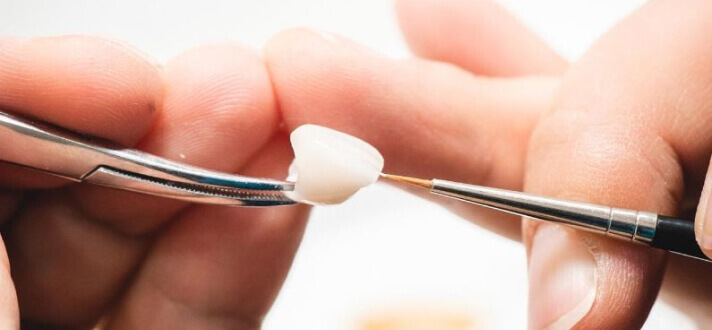
Veneers are ultra-thin coverings, typically made from porcelain or composite resin, that are bonded to the front surface of teeth. Their purpose is to refine the visible shape, size, or colour of a tooth.
Because veneers sit on the surface of the teeth, they are considered a cosmetic treatment rather than an orthodontic one. They do not change the position of the teeth within the jaw. Instead, veneers are used to enhance how teeth appear when you smile, which is why their role is generally limited to addressing mild misalignment or aesthetic concerns.
In high-end cosmetic dentistry, veneers are never a one-size-fits-all solution. Factors such as material choice, thickness, edge design, and surface texture are carefully planned to suit the individual face, smile dynamics, and functional bite. This level of detail is what distinguishes natural-looking veneers from restorations that can appear artificial or overdone.
How crooked is too crooked for veneers?
When assessing crooked teeth, dentists commonly describe misalignment as mild, moderate, or severe. These distinctions help guide which treatment options may be appropriate.
Assessment is not based on appearance alone. Factors such as tooth angulation, gum levels, bite forces, and long-term stability all play a role in determining whether veneers can be planned conservatively and predictably.
Mild misalignment may involve small overlaps of around one to two millimetres, slight rotation, or a single tooth that sits marginally out of line. In these cases, veneers or composite bonding may be considered, provided the teeth and bite are otherwise healthy.
Moderate misalignment typically includes more noticeable overlap, often around two to four millimetres, or several teeth that are out of position. In many of these situations, orthodontic treatment such as Invisalign is recommended first, with veneers considered later if cosmetic refinement is desired.
Severe misalignment may involve significant crowding, pronounced rotation, or bite issues such as an overbite, underbite, or crossbite. Veneers alone are generally not suitable here, as orthodontic treatment is needed to address functional concerns.
What results can veneers achieve?
Veneers tend to be most effective when misalignment is mild and the concern is primarily cosmetic.
In premium cosmetic work, the aim is not to disguise misalignment, but to create visual harmony while preserving as much natural tooth structure as possible. When veneers are used in suitable cases, careful planning plays an important role in achieving a balanced, natural appearance.
For example, when the front teeth overlap slightly, veneers can sometimes be used to soften the appearance of crowding by adjusting the visible contours of the teeth. This approach does not involve moving the teeth themselves, but can create a more even overall appearance in appropriate cases.
Veneers may also be considered when a single tooth is slightly crooked, particularly if the surrounding teeth are otherwise well aligned.

Can veneers be used for overlapping teeth?
In cases of mild overlap, veneers may be used to improve appearance by reshaping the visible surfaces of the teeth. This can help reduce the prominence of small overlaps without altering tooth position.
Where overlap is more pronounced, or where it affects bite or oral health, orthodontic treatment is generally recommended before cosmetic options are explored.
Can a single crooked tooth be treated with a veneer?
Yes, in some cases. When one tooth sits slightly out of line and neighbouring teeth are well positioned, a single veneer may be used to improve balance and symmetry within the smile.
Whether this is appropriate depends on factors such as tooth position, bite alignment, and overall oral health, all of which need to be assessed clinically.
Treating a single tooth successfully requires a high level of planning and material control, as the restoration must blend carefully with natural enamel. With careful design and execution, the aim is to achieve a result that integrates naturally with the surrounding teeth.
Veneers vs orthodontic treatment
Veneers and orthodontic treatments such as Invisalign are often compared, but they address different aspects of dental care.
Veneers focus primarily on appearance and are typically completed over a shorter timeframe. Orthodontic treatment works more gradually, repositioning teeth within the jaw and addressing alignment at the root level.
From a long-term planning perspective, addressing alignment first can, in suitable cases, allow for more conservative cosmetic refinements later. This approach may reduce the need for extensive reshaping and supports both aesthetics and function over time.
From a clinical standpoint, veneers are generally best suited to cases where crookedness is mild and the teeth and bite are healthy. When misalignment is more noticeable, addressing alignment first often allows for a more conservative approach to cosmetic treatment.
| Treatment | Primary purpose | How it works | Typical timeframe | Long-term considerations |
| Porcelain veneers | Cosmetic improvement | Reshapes the visible surface of teeth | 2 to 4 weeks | Ongoing care required; may need review or replacement over time |
| Invisalign | Tooth alignment | Gradually repositions teeth within the jaw | 6 to 18 months | Preserves natural tooth structure; retainers often needed |
| Combined treatment | Alignment followed by cosmetic refinements | Teeth are aligned first, then refined cosmetically | Varies | May allow for more conservative cosmetic treatment |
Common concerns
It’s common to have questions before considering veneers. Some people are concerned about whether teeth may continue to move. Veneers themselves do not cause teeth to shift, although existing alignment issues may still need to be managed separately.
Others worry about veneers appearing unnatural. Modern veneers are designed to look subtle and proportionate, though outcomes depend on careful planning and individual anatomy.
Teeth grinding is another frequent concern. In some cases, a night splint may be recommended to help protect the teeth and any restorations.
It’s also common to ask whether orthodontic treatment remains an option after veneers. In many cases it does, although planning alignment first is often simpler.
A comprehensive consultation allows these factors to be discussed in detail, so cosmetic treatment decisions can be made with consideration for both immediate aesthetic goals and long-term oral health.
Treatment options
Veneers are not the only option for addressing crooked teeth. Your treatment options may include:
- Porcelain veneers could be considered for cosmetic changes in mild cases
- Invisalign is used to gradually reposition teeth
- Composite bonding may be suitable for small cosmetic adjustments
Treatment planning for crooked teeth is highly individualised. Rather than offering a single solution, a range of options is considered, with recommendations tailored according to clinical findings, aesthetic goals, and long-term stability.
A consultation provides the opportunity to assess your teeth in detail, discuss your concerns, and explore treatment options tailored specifically to you. Where appropriate, orthodontic alignment, cosmetic treatment, or a staged approach may be discussed as part of a plan that prioritises long-term oral health and natural aesthetics.
Summary
- Veneers may improve the appearance of mildly crooked teeth by reshaping the visible surface rather than moving the teeth.
- Veneers do not correct underlying alignment or bite issues, which may require orthodontic treatment.
- Mild misalignment usually involves small overlaps or slight rotation, while more significant misalignment is better managed with orthodontics.
- In some cases, a combined treatment approach may be considered, with orthodontic treatment followed by veneers.
- Suitability depends on individual clinical factors, which should be assessed by a dental professional.
- High quality cosmetic outcomes rely on careful diagnosis, conservative planning, and an understanding of both aesthetics and function